


Talentium vs LinkedIn Recruiter: which one fits your team?
Talentium covers the work from an open role to a shortlist you can hand over: it finds people who never applied, screens the ones who did, shows why each one fits, and sends the outreach. LinkedIn Recruiter searches LinkedIn members through filters and boolean strings, and the candidate data largely stays inside LinkedIn. Talentium starts free and publishes its pricing; LinkedIn Recruiter is quote-only.

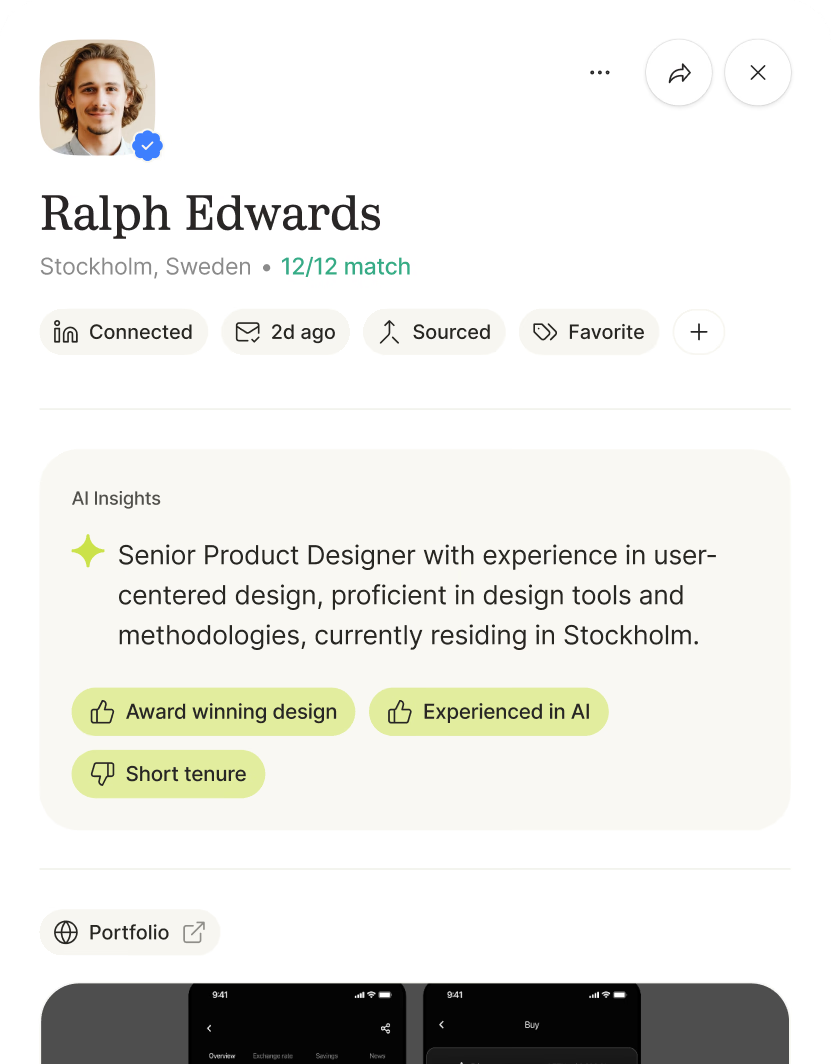
Should you choose Talentium or LinkedIn Recruiter?
Talentium covers the whole job, from an open role to a shortlist you can hand over. LinkedIn Recruiter covers one part of it: search and messaging inside its own network.
Choose Talentium if the people you need are not applying, if the applicants you already have never get properly reviewed, if you have to show why each candidate fits, if outreach should come from your own accounts rather than a platform, or if the shortlist has to land in your ATS with the reasoning attached.
Choose LinkedIn Recruiter if everyone you hire keeps an active LinkedIn profile, you already know which titles and companies you want, and messaging inside LinkedIn is enough.
Many teams use both.
Talentium vs LinkedIn Recruiter at a glance
How you search
Talentium
Plain language, or paste the job descriptionLinkedIn Recruiter
40+ filters and boolean stringsSources
Talentium
850M+ open-web profiles, your talent pool, your own applicantsLinkedIn Recruiter
LinkedIn members onlyEvidence beyond the profile
Talentium
GitHub, HuggingFace, research papers, conference talks, portfoliosLinkedIn Recruiter
NoneNordic-language support
Talentium
Swedish, German or French mixed with English in one promptLinkedIn Recruiter
Hiring Assistant runs in seven languages, none of them NordicWhat you get per candidate
Talentium
A written case – six verdicts per requirement, with evidence and gapsLinkedIn Recruiter
Behavioural spotlights, not fit judgmentsOutreach
Talentium
Drafted from the candidate's background, sent from your own accountsLinkedIn Recruiter
Inside LinkedIn, within a monthly InMail allowanceScreens the applicants already in your ATS
Talentium
Yes, in the same searchLinkedIn Recruiter
Paid add-on, qualifying ATS platforms onlyExported candidate record
Talentium
Full profile with the evaluation attachedLinkedIn Recruiter
Profile record only, no evaluationExport in bulk
Talentium
A whole pipeline stage in one actionLinkedIn Recruiter
One at a time, capped at 300 per seat per monthBuilds a talent pool you own
Talentium
Deduplicated, enriched, searched on every new roleLinkedIn Recruiter
NoHiring managers without a paid seat
Talentium
Limited-access accounts and expiring share linksLinkedIn Recruiter
Requires a seatPricing
Talentium
Published, with a free planLinkedIn Recruiter
Quote onlyWhere your data is stored
Talentium
EULinkedIn Recruiter
USLinkedIn Recruiter details from LinkedIn's own published documentation, checked 21 September 2026: Recruiter System Connect FAQ, Hiring Assistant, AI-Assisted Search
Which finds more candidates?
Talentium, because it is not limited to one network.
LinkedIn Recruiter searches LinkedIn members. You narrow the network with 40+ filters and boolean strings you build yourself, and the pool never leaves LinkedIn. Members keep their own profiles up to date, so no single source has fresher employment data. That is also the limit. It only finds people who keep a LinkedIn profile.
Talentium runs one search across 850M+ profiles on the open web, your team's talent pool and your own applicants, all assessed on the same criteria. It reads where work is actually visible: code on GitHub and HuggingFace, research papers, podcasts, conference talks, personal portfolios. That is how it finds the engineer whose evidence is their code and the specialist whose evidence is a conference talk.
You describe the role in plain language and Talentium works out what it actually requires. You decide which candidates move forward.




How Talentium explains every match
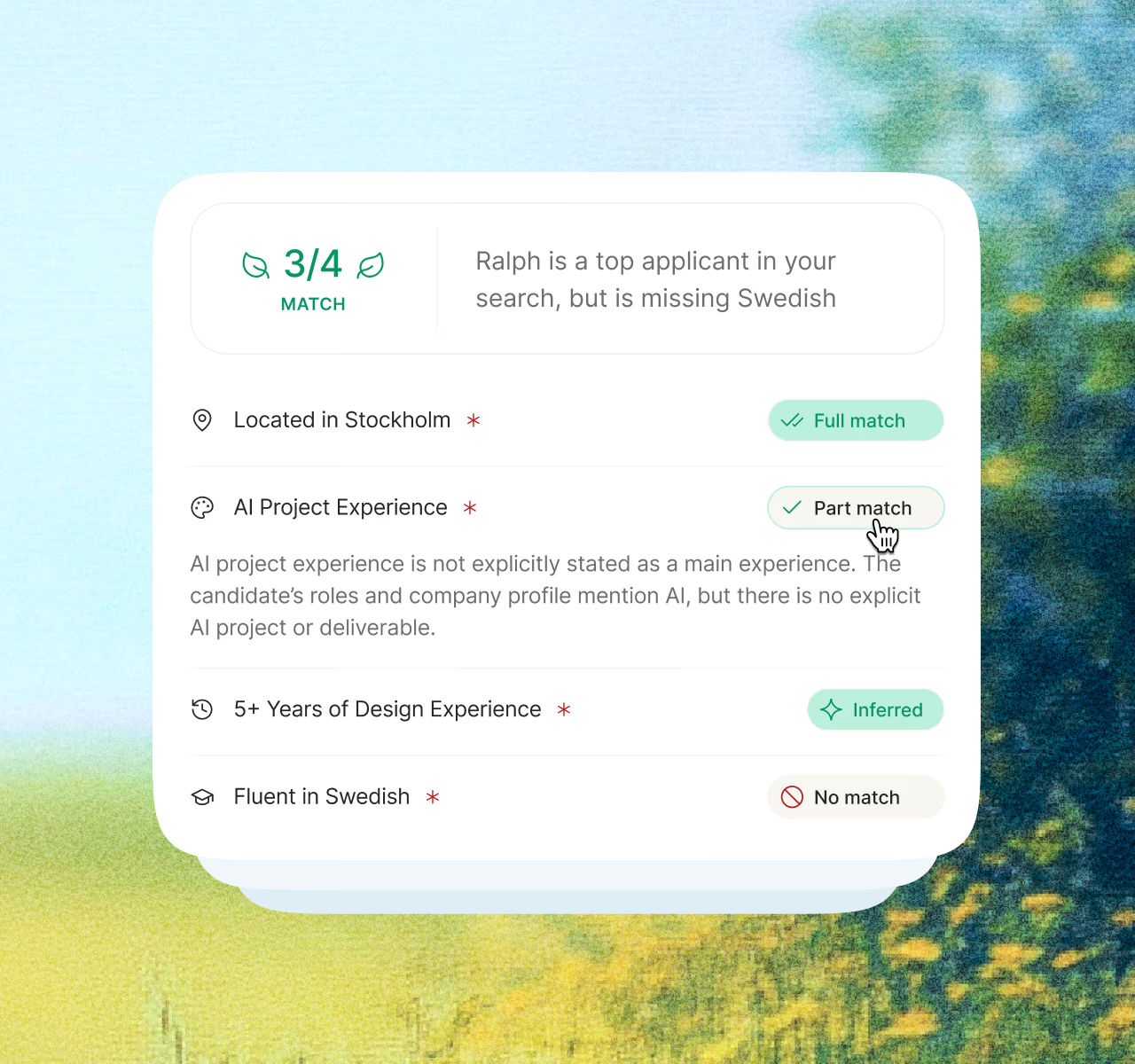
Talentium reads every candidate against each requirement individually and returns a written case.
Each requirement gets one of six verdicts: strong, borderline, partial, overqualified, need more info, or no match. You get a count of requirements met rather than a percentage. A score hides the reason.
"Need more info" is the verdict that matters most. The profile is too thin to judge, and that person could still be the hire – a filter would have dropped them silently. Requirements split into must-haves and nice-to-haves, and softening one re-ranks the list without running the search again.
LinkedIn Recruiter offers spotlights – open to work, likely to respond, past applicant. Those are signals about behaviour, not judgments about fit: they tell you someone is likely to reply, not whether they can do the job.
Does LinkedIn Recruiter screen the applicants in your ATS?
Not on a standard Recruiter seat. LinkedIn looks at the candidates it finds in its own network. The people who applied to you, sitting in your ATS, are never checked. Reaching into an ATS takes Hiring Assistant, which LinkedIn sells as a paid add-on to Recruiter and which works through LinkedIn's ATS integrations, with availability varying by partner.
Talentium checks everyone who applied against the same requirements as everyone you sourced, in the same search, and each one comes back with the same written case. Part of your shortlist is often already in your own ATS – someone who applied, got a no, and is right for the role you opened four months later.
Where does the outreach come from?
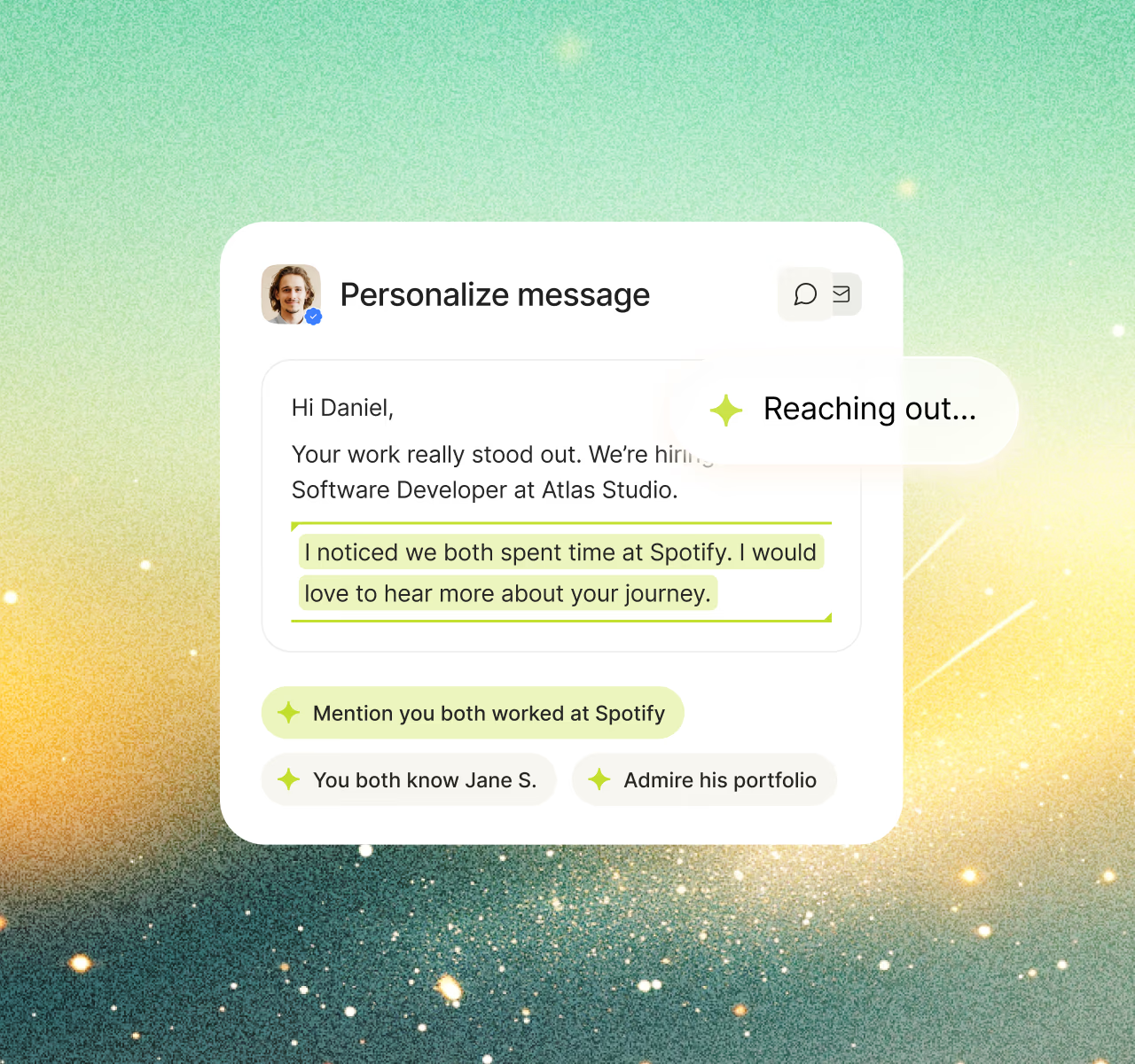
From your own accounts. Talentium drafts each first message and every follow-up from the candidate's background and the role, and sends from the accounts your candidates already recognise, not from a platform address.
You approve what goes out. Sequences run with business-day delays and stop the moment a candidate replies. A hard bounce pauses the sequence instead of sending into a dead address. Everything lands in one inbox, threaded to the candidate, so nothing has to be chased across tools.
LinkedIn Recruiter sends inside LinkedIn, within a monthly InMail allowance per seat. Extra capacity is bought separately. InMail does arrive in a channel candidates open expecting job messages.
AIKOCorp gets 40% response rates sourcing GitHub profiles with Talentium.
A finished shortlist in the tools you already use
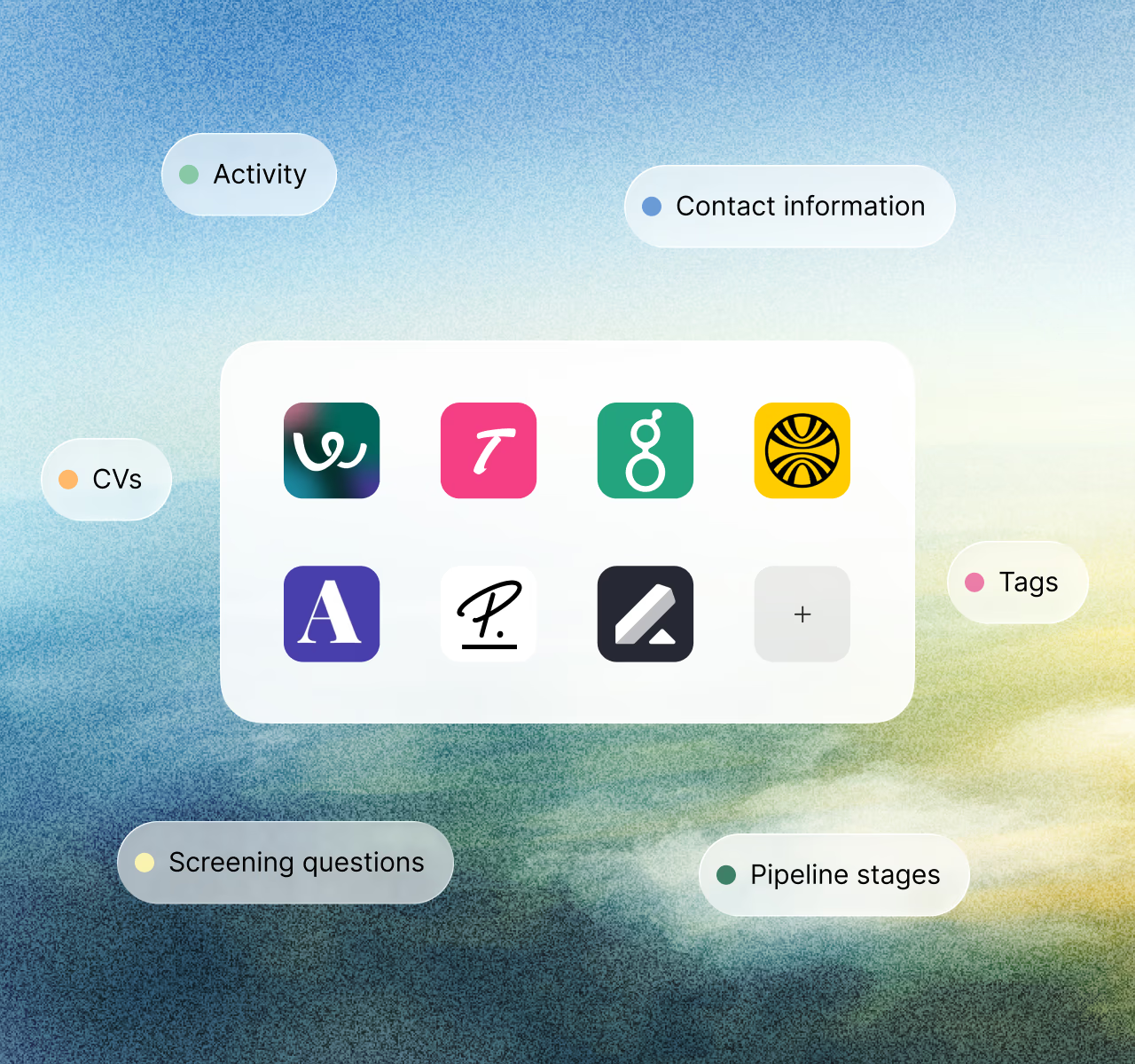
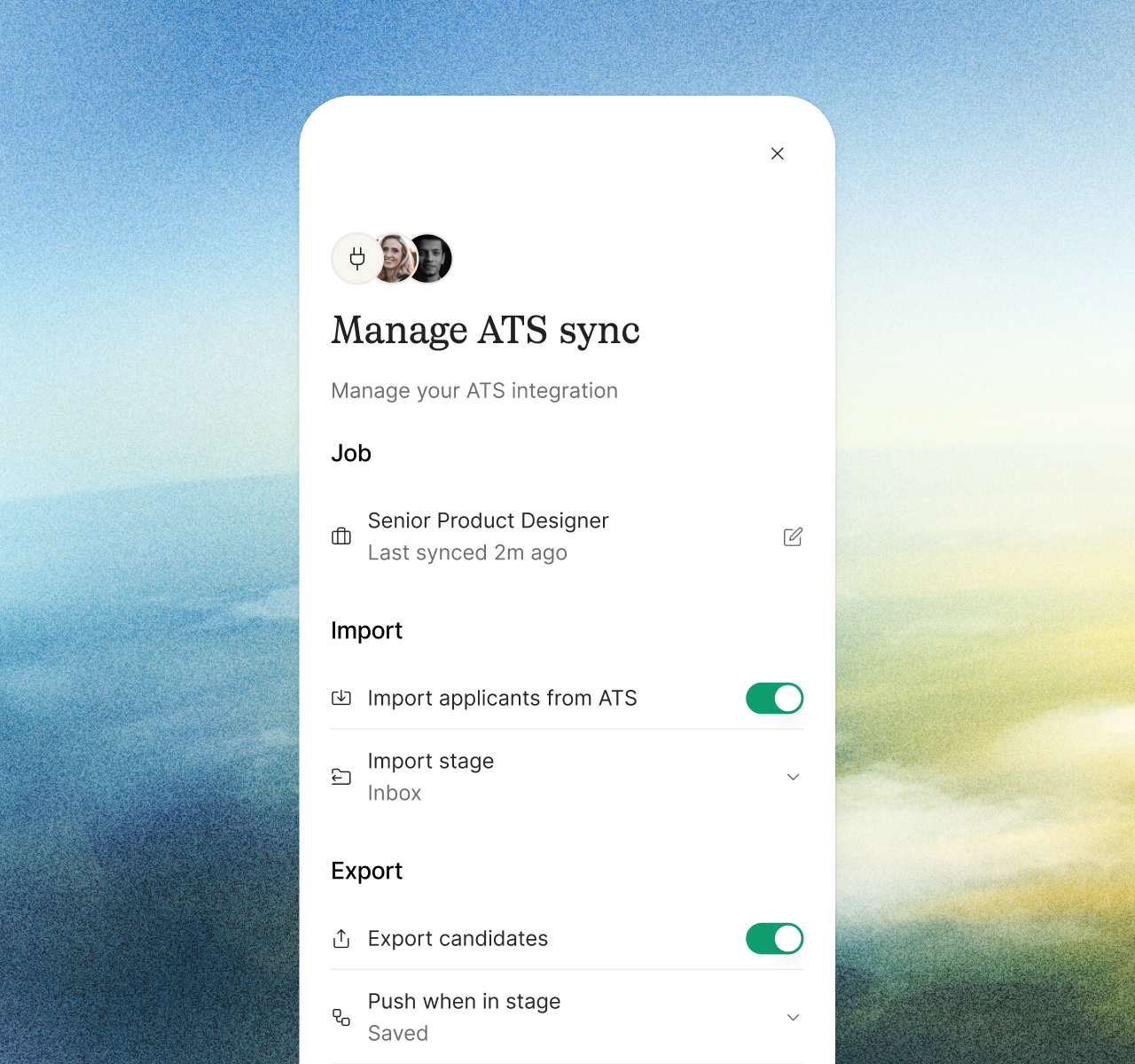
Talentium does not replace your ATS, it feeds it. Candidates export with the full evaluation attached, so a recruiter opens their ATS and sees why each person is a fit. An entire pipeline stage moves in one action, and sync runs both ways.
Updates land in Slack and Teams, so the team can follow a role without opening another tool. You can also work from Claude or Cursor through a connector.
Which is better for GDPR and the EU AI Act?
Talentium, if your team hires in Europe. It is built in the EU, stores data in EU data centres, and can show its work on every decision it puts in front of you.
The EU AI Act treats recruitment as high-risk. That turns two things from paperwork into product questions: can you explain a decision, and where does the data sit?
Talentium is built in the EU and stores data in EU data centres. Customer data is never used to train foundation models. You can explain any decision because the product shows its work: a verdict on each requirement, the evidence behind it, and a recruiter who can disagree and change it. Every fact on a candidate profile shows where it came from. The recruiter sets the requirements, approves every message and makes every hiring decision – Talentium does the work, not the judgment.
LinkedIn is a US product operating under its own compliance framework. It publishes an AI transparency page, with no EU AI Act disclosure and no recruiter-facing explainability documentation. European teams use LinkedIn Recruiter every day – it is a question of what your own compliance process requires, not a blocker.
FAQ
Choose Talentium if the people you need are not applying, if the applicants you already have never get properly reviewed, if you have to show why each candidate fits, if outreach should come from your own accounts, or if the shortlist has to land in your ATS with the reasoning attached. Choose LinkedIn Recruiter if everyone you hire keeps an active LinkedIn profile and messaging inside LinkedIn is enough. Many teams use both.
Yes. Talentium searches the open web, your own talent pool and your applicants, and returns a written case for every candidate. LinkedIn Recruiter searches LinkedIn members through filters and boolean strings.
Yes. LinkedIn can only find people who keep a LinkedIn profile current. Talentium searches 850M+ open-web profiles and reads evidence LinkedIn does not hold – code on GitHub and HuggingFace, research papers, conference talks, portfolios – and it assesses the applicants already in your ATS in the same search.
Not on a standard Recruiter seat. Reaching into an ATS takes Hiring Assistant, which LinkedIn sells as a paid add-on and which runs through its ATS integrations, with availability varying by partner. Talentium checks everyone who applied against the same requirements as everyone you sourced, in the same search.
Talentium covers more ground on its own: more sources, a written case for every match, and your own ATS pool included. Some teams still keep one LinkedIn Recruiter seat, because members maintain their own profiles and that makes LinkedIn the freshest single source of current employment.
Talentium starts free, then from €149 per user per month, 20% less on annual billing, with AI included on every plan. LinkedIn Recruiter is quote-only: Recruiter Lite is reported around $170 a month and Corporate seats around $750–1,080 a month, so the gap is large at the top tiers.
Talentium, in most cases. It has a free plan, so you can run your first search today. LinkedIn Recruiter is priced per seat on an annual contract, which is a larger commitment for your first few roles.
Talentium covers more ground. It searches the open web and your own talent pool, returns a written case for every match, screens the applicants already sitting in your ATS, and exports the reasoning into your ATS in bulk. Some in-house teams combine Talentium across every source with a LinkedIn Recruiter seat.
Talentium fits agency work when you need to present a shortlist quickly and explain every candidate to a client. Each match comes with a count of requirements met, the evidence behind each one, and the gaps named. Outreach goes from your consultants' own accounts, so candidates hear from your people and not from a platform. Everything your team touches builds a talent pool the agency owns.
Talentium reads where technical work is actually visible – code on GitHub and HuggingFace, research papers, conference talks – rather than only profiles people maintain by hand. The same search also covers commercial roles and hard-to-find specialists.
No. Talentium searches, evaluates and drafts messages. The recruiter sets the requirements, reads the evidence behind every match, can disagree with and override it, approves every message and makes every hiring decision. Talentium is built in the EU and designed for GDPR and the EU AI Act.
Yes. Talentium is built in the EU and stores data in EU data centres. Customer data is never used to train foundation models, and every fact on a candidate profile shows where it came from.
No. Talentium feeds your ATS: candidates export with the full evaluation attached, syncing both ways. It is not an ATS, a note-taker or an interview tool. It stops at the shortlist.
The short version
Talentium covers the work from an open role to a shortlist you can hand over: it finds people who never applied, screens the ones who did, shows why each one fits, sends the outreach, and hands the shortlist to your ATS or however else you prefer to work. LinkedIn Recruiter covers search and messaging inside one network.
Find. One search across 850M+ open-web profiles, your team's talent pool and the applicants already in your ATS – including evidence LinkedIn does not hold, like code on GitHub and research papers.
Screen and evaluate. Everyone is checked requirement by requirement – the people you sourced and the people who applied. You get a count of how many requirements each one meets, not a score, and the gaps are named.
Reach out. First message and follow-ups drafted from the candidate's background, sent from your own accounts, threaded into one inbox.
Hand off. A whole pipeline stage exported in one action with the reasoning attached, and hiring managers involved without a paid seat.
Everything the team touches stays in a pool that every new search reads. Talentium is built in the EU, and the recruiter makes every decision.
Talentium publishes its pricing and has a free plan. LinkedIn Recruiter is quote-only.
LinkedIn gives you a network. Your ATS gives you a system of record. Talentium gives you the candidates you should hire, and shows you why.
What are the best alternatives to LinkedIn Recruiter?
The tools most often compared with LinkedIn Recruiter are Talentium, Juicebox, Metaview, Pin and Happenstance. They are not interchangeable. Each one is built around a different part of the work.
Talentium covers the whole span from an open role to an interview-ready shortlist: sourcing across the open web, your talent pool and your own applicants, a written case for every candidate, outreach from your own accounts, and the shortlist exported into your ATS with its reasoning attached. Built in the EU.
Juicebox is outbound sourcing over a licensed index, with contact enrichment and email sequencing. Its email deliverability tooling is more built out than ours, and a boolean query returns instantly. US-hosted.
Metaview is a recruiting suite built around the interview, with sourcing added on licensed third-party data. If the bottleneck is screening high inbound volume rather than finding people who never applied, its interview layer is the strongest in this group. UK-hosted.
Pin is an AI sourcing agent with outreach and a light CRM over a licensed index. Its deduplication is clean, and it excludes protected characteristics from its matching model architecturally rather than by policy. US-hosted.
Happenstance searches the contacts your team has uploaded and returns a warm-intro path. For a well-connected team, a warm path beats a cold profile. It does not send outreach or run a pipeline.
Each of these is strong in one part of the work. Talentium covers the work from an open role to a shortlist you can hand over.
Competitor descriptions are drawn from each vendor's own published product documentation, checked 15 September 2026.
LinkedIn and LinkedIn Recruiter are trademarks of Microsoft Corporation. Talentium is not affiliated with, endorsed by, or sponsored by LinkedIn. This comparison is based on publicly available information and on our own product, and reflects our understanding at the time of writing.